In 2024, 2,877 people in Berlin were buried by public authorities because their relatives could not be traced in time. They accounted for more than 7.6 percent of all deaths in the city that year. In Tokyo within the same year, more than 4,200 people died at home and were not discovered for more than eight days. A 2024 study estimated that 2 to 4 percent of deaths in the United States were not only unaccompanied but also unclaimed. Across advanced capitalist societies, more and more people are living alone. More of them, too, are dying alone.
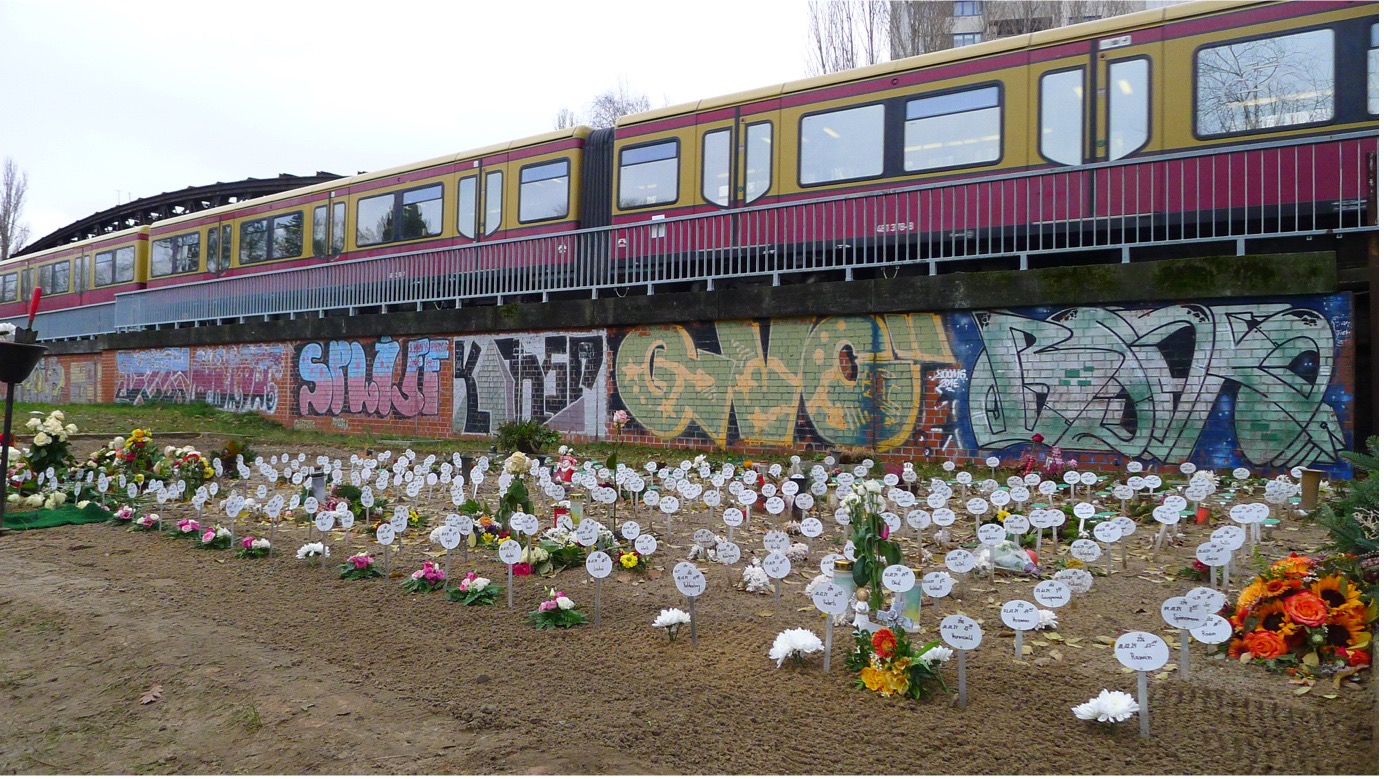
In Berlin, most of the burials by the authorities take place at the St. Hedwig Cemetery in Mitte. After cremation, the unclaimed dead are placed in urns and buried side by side. Their graves are marked by signs bearing surnames, date of burial along with a serial number.
Lonely deaths occur across all socioeconomic groups, but there are patterns. For example, according to the official undertaker for the regulatory burials of Berlin (interviewed in May 2023), such cases are rarer among migrants from the Global South, who are likely to have stronger social safety networks compared to older residents. What this contrast suggests is that the likelihood of lonely death is closely tied to the density and durability of social ties. Indeed, three factors seem especially important in the global rise of lonely death, and its particular prevalence in metropolitan centers: an increase in single-person households, a broad decline of family formation, and a general erosion of social contact. None of these trends appear likely to reverse; the number of lonely deaths will therefore almost certainly continue to rise. This leaves societies with a difficult set of questions. Should they try to prevent lonely death, at the risk of stigmatizing those who live alone? Should they normalize it, and in doing so ignore the structural conditions that produce it? When someone dies alone, what, exactly, is owed to the dead—and by whom?
The Tatortreiniger and the ihinseiri
Japan and Germany both experienced rapid economic growth from the 1950s onward, followed by stagnation, lower fertility, and smaller or slower rates of family formation. Today, more than half of all households in both Tokyo and Berlin consist of a single person. In both countries, lonely death has become an object of fascination, appearing in books, films, television, and social media. At the center of this cultural imagination stands a figure from the service economy itself: the post-mortem cleaner, who encounters lonely death up close. The stories told about such workers differ sharply between Germany and Japan, and these differences reveal more than just contrasting attitudes toward death.
In Germany, lonely death is most often framed through the conventions of crime fiction: post-mortem cleaners are generally referred to as Tatortreiniger or “crime-scene cleaners,” echoing the vastly popular Tatort crime-TV franchise. Popular books such as Peter Anders’ Was vom Tode übrig bleibt: Ein Tatortreiniger berichtet (What Remains of Death: A Crime Scene Cleaner Reports, 2011) promise “exciting criminal cases, moving fates, and transcendent experiences that go beyond the experiential.” Yet crime plays little role in the reality of most German lonely deaths. Among the cases handled by the company run by Marcell Engel—himself a Tatortreiniger and the author of the 2021 book Die sieben Prinzipien des Tatortreinigers—only around 10 percent involve murder and 20 to 25 percent suicide. Instead, most lonely deaths concern people who lived alone. At a public discussion in October 2025, Engel reflected on the title crime-scene cleaner: “It just sounds a bit modern. It sounds ‘wow.’ It gives the matter a certain depth that society seeks, namely in sensation.”
The now numerous Japanese bestsellers on the subject approach the phenomenon from a very different angle. An Ihinseiri Expert Saw It!: Helping You Move to Heaven, written by Taichi Yoshida in 2006, was the first of its kind.
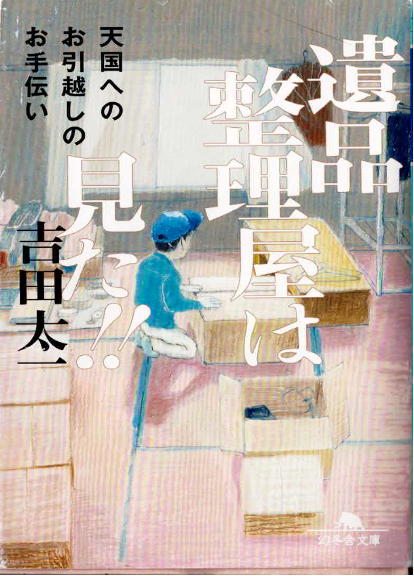
It popularized the term ihinseiri—literally, “sorting through the belongings of the deceased”—which has since become the mainstream name for the profession. When a person’s death goes unnoticed for a long time, the work of ihinseiri practitioners can resemble that of the Tatortreiniger: they apply insecticide against flies and maggots, clean and disinfect bodily fluids, and remove the smell of decomposition. But their work extends beyond the traces left by the body. They also sort through the dead person’s belongings, gather mementos, and identify items to be sent for memorial services or recycling. Yoshida describes this work as “respecting the life of the deceased.” When he enters the rooms of people who have died alone, he writes, “the lingering traces of life remain.”